Why Mobile Trading Isn’t Always the Best Option
The ability to place a trade from almost anywhere sounds like an undeniable advantage. Whether you’re commuting, waiting for a meeting, or relaxing at a café, your entire trading account fits in your pocket. Modern forex trading platforms have made that level of accessibility possible, and for many traders, it has become the default way to monitor the markets.
Convenience, however, is not always the same as effectiveness. The features that make mobile trading attractive can also encourage faster decisions, shorter attention spans, and less thorough analysis. Those trade-offs are easy to overlook because they rarely show up as a single costly mistake. Instead, they accumulate over dozens of trades.
The question isn’t whether mobile apps work. They clearly do. The better question is whether they are the right tool for every trading decision.
The Small Screen Changes How You Analyze Markets
Charts look different on a phone than they do on a desktop monitor.
Compressing multiple indicators, support and resistance levels, and higher time frame trends into a small display often forces traders to simplify their analysis. That isn’t always beneficial. Important price context can disappear simply because there is not enough room to display it comfortably.
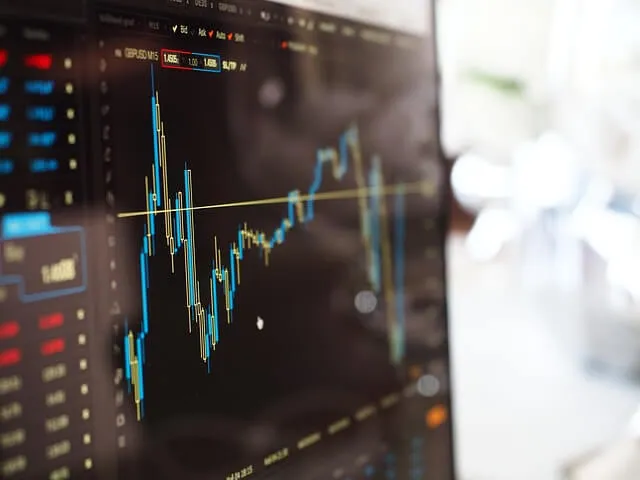
Image Source: Pixabay
A trader reviewing the GBP/USD on a desktop may immediately notice that price is approaching a weekly resistance level while also forming a bearish divergence on a four-hour chart. On a mobile screen focused only on the latest candles, that broader picture is much easier to miss.
The limitation isn’t analytical skill. It is screen space.
Speed Can Become a Disadvantage
Many people assume faster execution automatically leads to better trading.
The opposite can be true.
Because opening a position takes only a few taps, mobile devices remove natural pauses that might otherwise encourage another look at the chart. On a desktop setup, switching between time frames, reviewing economic news, and checking risk calculations requires a little more effort. That extra time often prevents impulsive decisions.
Research published by the Financial Industry Regulatory Authority (FINRA) has highlighted how digital interfaces can influence investor behavior by encouraging frequent engagement and rapid decision-making. While the research covers investing broadly, the behavioral effects are highly relevant to active traders using mobile devices.
Convenience changes behavior more than most people expect.
Some Trading Situations Demand More Than an App
Imagine the market is waiting for the latest U.S. Consumer Price Index report. Before the release, the EUR/USD trades quietly within a narrow range.
The inflation numbers come in significantly higher than expected. Within seconds, spreads widen, volatility spikes, and price swings sharply in both directions before settling into a clearer trend.
A trader relying only on a mobile connection in a crowded public place may struggle to switch between charts, monitor economic updates, adjust stop-loss levels, and react if internet performance briefly weakens. A desktop environment with multiple windows provides a clearer view of everything happening at once.
In fast-moving conditions, information matters just as much as execution speed.
Mobile Works Best for Specific Tasks
That does not mean trading apps should be avoided.
They are extremely useful when used for the right purpose.
- Monitoring existing positions while away from your desk
- Receiving price alerts and economic calendar notifications
- Closing trades during unexpected market events
- Checking account balances and margin levels
Each of these tasks benefits from portability without demanding extensive chart analysis.
The mistake occurs when monitoring gradually turns into making complex trading decisions on a small screen under distracting conditions. Even experienced traders can become less selective when trades are always just a tap away.
Choosing the Right Tool for the Right Decision
There is another overlooked consideration.
Many traders spend considerable time comparing brokers yet devote little thought to where they actually execute trades. The device itself becomes part of the trading process. A larger monitor, stable internet connection, and distraction-free workspace can contribute more to consistent execution than adding another technical indicator.
That perspective shifts the conversation away from software features alone. The best forex trading platforms are only as effective as the environment in which they are used.
Before placing your next trade from a phone, ask whether it truly requires immediate action or whether waiting until you have access to a full trading setup would improve the quality of your decision. In many cases, the better opportunity is still there when you return to your desk.